We develop ceramic additives designed to control rheology, improve stability, and optimize the behavior of bodies, slips, glazes, and engobes during the production process.
Ceramic additives tailored to each production process
Ceramic additives allow for the modification and control of specific properties in the suspensions and formulations used during manufacturing. They influence parameters such as viscosity, fluidity, dispersion, wetting, foaming, cohesion, and system stability. At Kerafrit, we develop powder and water-based additives for various stages of the ceramic process.
Our range includes CMC, deflocculants, binders, dispersing agents, defoamers, wetting agents, leveling agents, rheology modifiers, bactericides, and other functional solutions. Each additive is selected or formulated by taking into account the raw materials, the type of substrate, the application technology, and actual production conditions.
This approach enables the adjustment of material behavior and improves the stability and repeatability of the industrial process.

Precise control of viscosity, flowability, and stability in ceramic suspensions.
Formulations tailored to specific raw materials, technology, and factory conditions.
More stable processes, with less variability and greater production control.
Additives designed to work with current technologies and complex systems.
Solid solutions designed to be incorporated directly into the formulations or mixtures used during the production process.
Liquid solutions that facilitate dosing and allow for specific adjustments to the system's behavior.
Binders developed to improve the cohesion and mechanical strength of the green piece, facilitating handling prior to firing.
Solutions designed to optimize the preparation of slips and bodies, improve their fluidity, and facilitate working with high solids content.

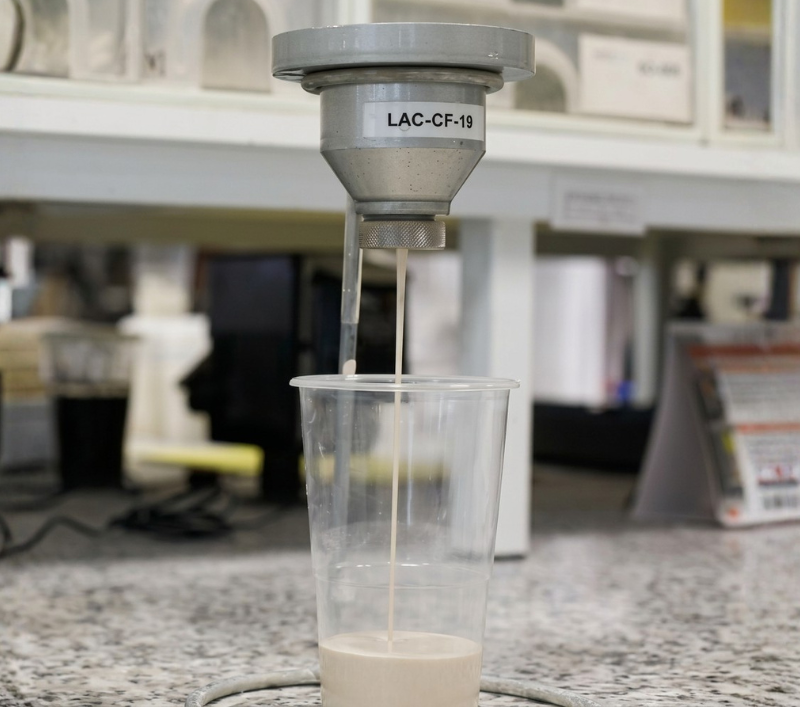
They adjust particle dispersion and rheological behavior in slips and suspensions, optimizing application and drying.
They improve the cohesion, adhesion, and stability of the material, especially in green bodies and demanding processes.
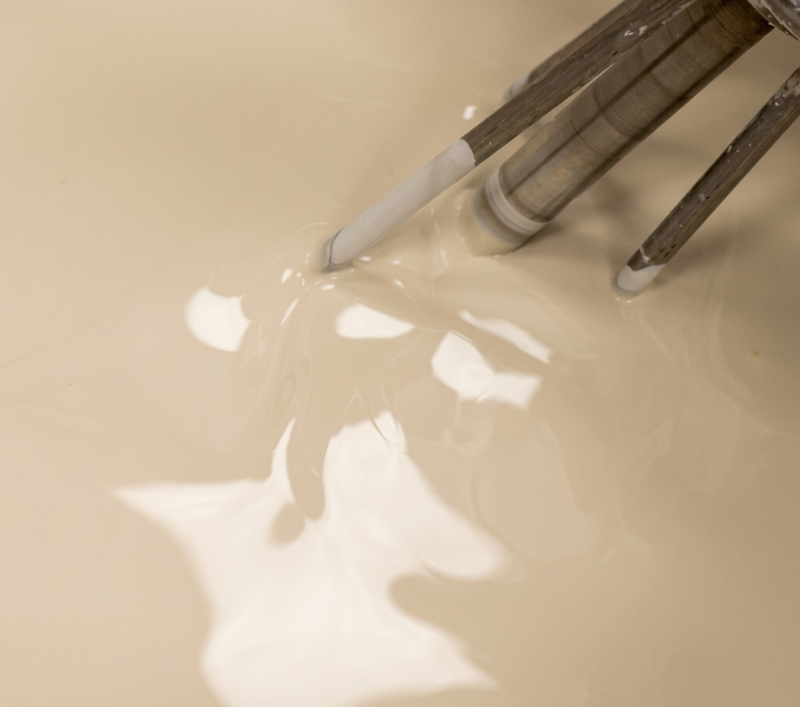
Specific solutions for water-based formulations: dispersants, defoamers, surfactants, and leveling agents.
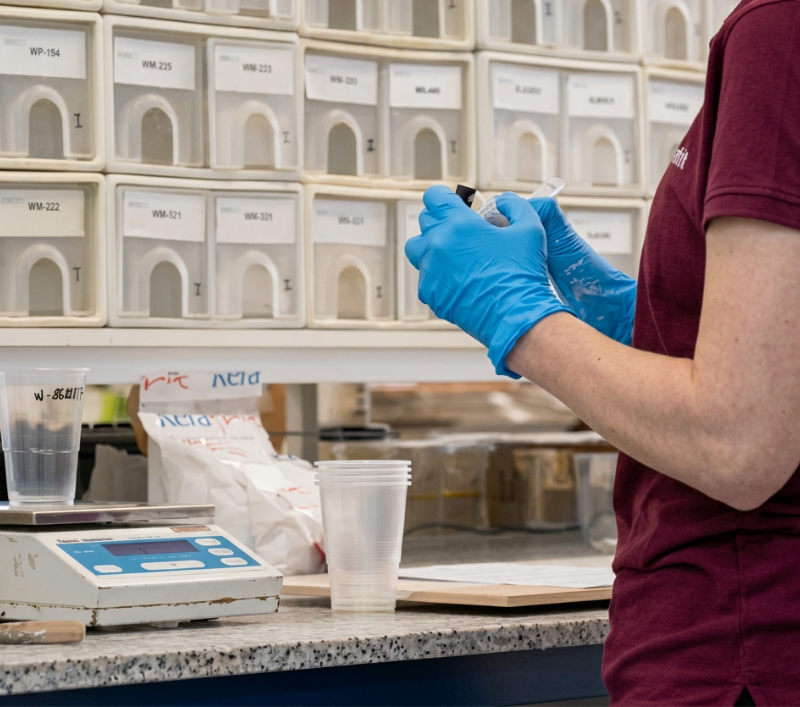
Customized developments tailored to the client's specific needs, under the "fit to you" concept.
Ceramic additives are components incorporated in controlled amounts into bodies, slips, glazes, engobes, and other formulations to modify specific properties of the system.
Depending on their function, they can be used to control viscosity, improve dispersion, increase cohesion, reduce foaming, promote wetting, or stabilize the material during preparation, storage, and application.
Kerafrit develops powder and water-based additives, including CMC, deflocculants, binders, dispersants, defoamers, surfactants, wetting agents, leveling agents, rheology modifiers, bactericides, coatings, and vehicles.
It also develops specific solutions for ceramic bodies and formulations tailored to the conditions of each production process.
Selection depends on the formulation composition, raw materials, solids content, pH, viscosity, application technology, and the behavior to be modified.
Interactions with other additives and system components must also be considered. For this reason, the choice typically requires laboratory testing and validation under conditions approximating actual production.
Powder additives can be incorporated directly into dry blends or during specific preparation stages. Water-based products facilitate dosing and allow for more precise adjustments to a prepared suspension.
The choice of format depends on the formulation, the point of incorporation, and the characteristics of the facility.
Yes. Our additives are formulated to integrate correctly with different raw materials, minimizing incompatibilities and process variations.
Yes. We develop deflocculants and binders for porcelain stoneware bodies, as well as other solutions designed to improve dispersion, processability, cohesion, and the green strength of the unfired piece.
The formulation is tailored to the body composition and the production conditions of each factory.
Additives help control parameters such as viscosity, dispersion, thixotropy, foaming, and suspension stability.
More consistent material behavior facilitates preparation, pumping, storage, and application, and helps reduce variability between different production batches.
Yes, provided they are compatible with each other and with the other components. It is common practice, for example, to combine a dispersant or deflocculant with a binder, a rheology modifier, or an antifoaming agent.
The combination and order of addition must be evaluated to avoid interactions that could alter the system's behavior.
The dosage is determined through testing on the client's formulation. Parameters such as viscosity, density, the deflocculation curve, stability, application, and behavior during drying or firing are analyzed.
There is no universal dosage, as the response can vary depending on the raw materials and production conditions.
Yes. Kerafrit develops solutions tailored to each formulation, facility, and production objective.
The process may include system characterization, raw material selection, testing, and validation of the additive under conditions closely resembling industrial production.
Yes. The technical team assists the client during the selection, testing, and adjustment of the additives.
Support may include formulation evaluation, dosage determination, compatibility analysis, and verification of on-line performance.
Rheological control and stability for ceramic suspensions.
Ceramic additives are technical solutions designed to modify specific properties of ceramic bodies, slips, glazes, engobes, and decorative systems. Depending on their formulation, they can influence particle dispersion, viscosity, fluidity, wetting, cohesion, foam formation, or system preservation. Selecting a ceramic additive requires consideration of raw materials, solids content, pH, the technology employed, the point of addition, and actual production conditions. Compatibility with other formulation components must also be verified. Kerafrit develops powdered and water-based ceramic additives for various stages of the industrial process. The product range includes CMC, deflocculants, binders, dispersing agents, defoamers, wetting agents, leveling agents, rheology modifiers, bactericides, coatings, and vehicles. Our technical team works closely with each client to select, adjust, or develop solutions tailored to their specific system, aiming to enhance the control, stability, and repeatability of the production process.