Technical granules for ceramics, formulated to add texture, volume, functionality, and technical value to the final finish, and adapted for various application technologies and industrial processes.
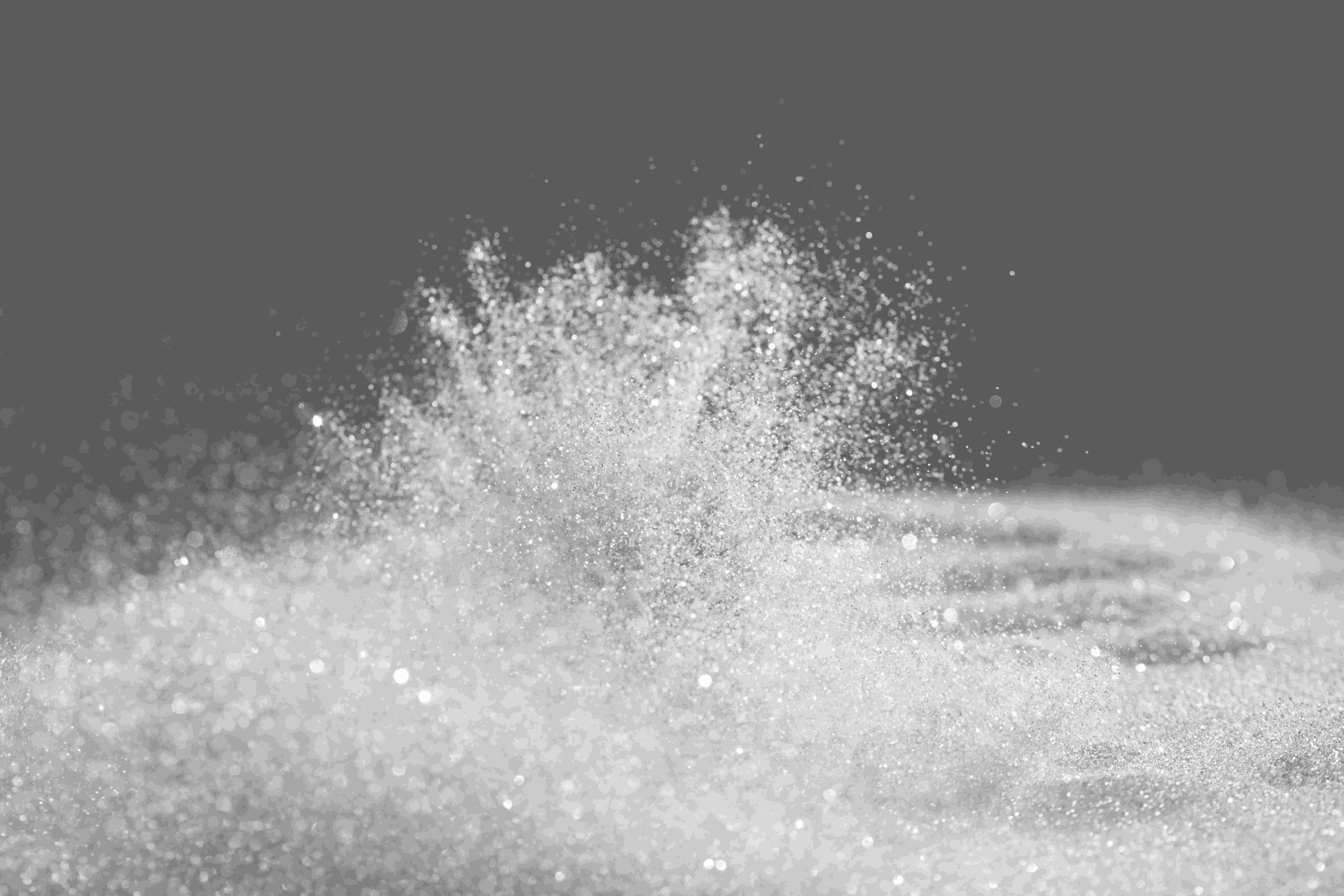
At Kerafrit, we develop and produce ceramic granules designed for integration into various glazing and decoration systems. Our solutions add volume, texture, and technical properties to the surface, adapting to each client's specific finishing requirements and production conditions. We work with a range of particle sizes, from micro- and nano-granules to larger formats designed to create more pronounced surface structures.
Composition and particle size are selected based on the application technology, base glaze, firing cycle, and desired final result. As a supplier of ceramic granules, we offer solutions for dry application, suspension-based application, and digital systems. Each formulation is tailored to ensure stable application, proper integration with the glaze, and controlled behavior during firing.

Compatible with dry, wet and digital systems.
Anti-slip, polishable and wear and abrasion resistant solutions.
Micro, nano and technical grits adapted to each surface effect.
Controlled online behavior and reproducible results after cooking.
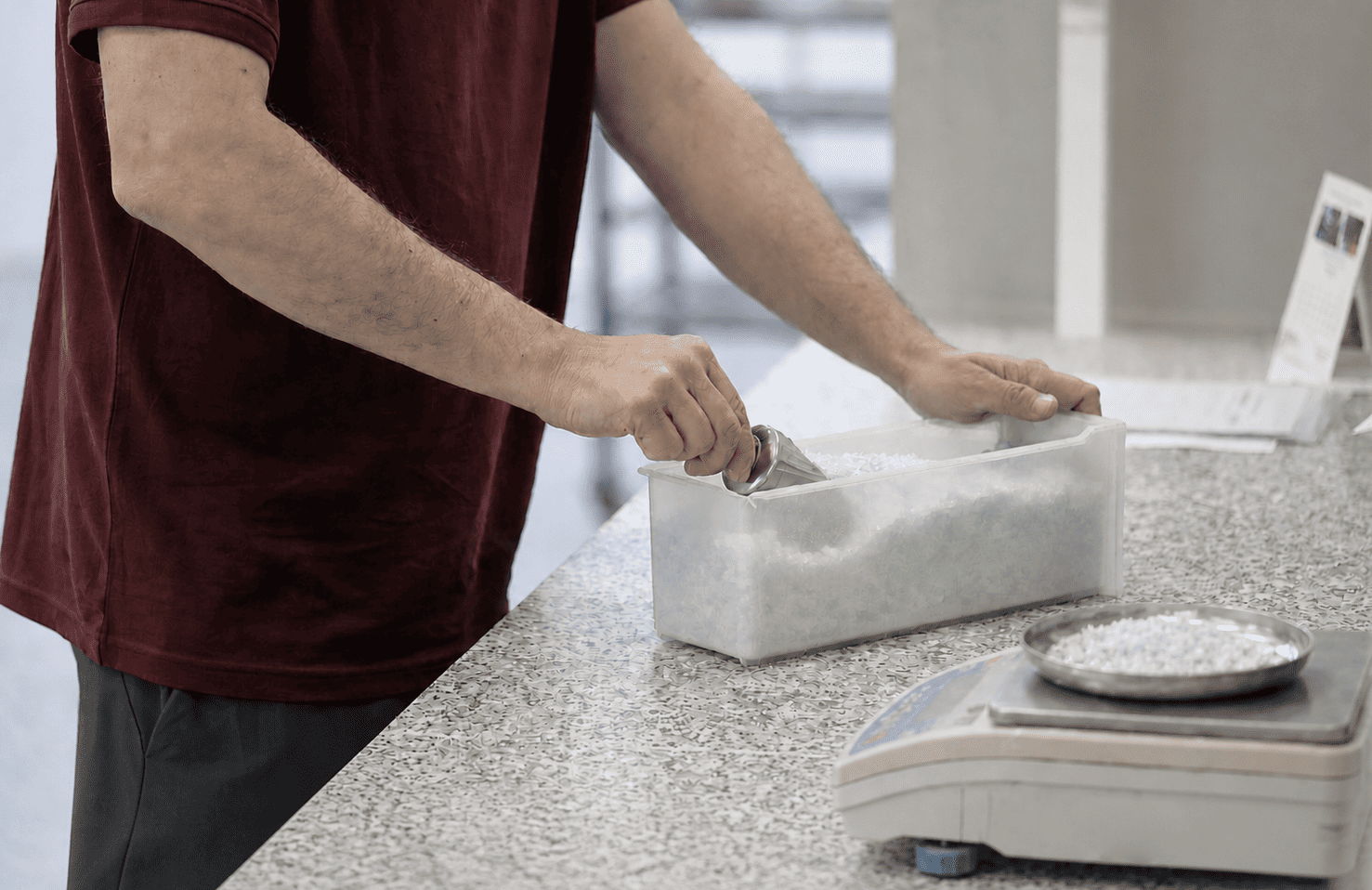
Ceramic granules are particles with a vitreous or ceramic composition and controlled grain size that are applied to glazes or ceramic surfaces prior to firing.
They are used to provide texture, volume, gloss, a matte finish, polishing effects, surface resistance, or other technical and aesthetic properties.
Frits are commonly used as raw materials in the formulation of glazes, engobes, and other ceramic products. Granules, on the other hand, feature a specific particle size and are typically applied to the surface to create a particular technical or aesthetic effect.
Although both may be vitreous in nature, their form, function, and application methods differ.
The selection is based on the desired outcome: high gloss, matte, satin, polished, or non-slip finish, as well as abrasion resistance or structural volume.
Based on this objective, the composition, particle size distribution, application quantity, and application method are adjusted, while also taking into account the base glaze and the firing curve specific to each factory.
The main difference is particle size. Finer particle sizes allow for the creation of more subtle surface effects and are compatible with higher-precision application technologies.
Larger granules enable the creation of more pronounced textures, added volume, and visible surface structures.
Granules can be applied dry, via liquid suspensions, or using specific digital systems.
The choice depends on the particle size, the granule formulation, the quantity to be deposited, and the desired surface effect.
Kerafrit offers granules developed for digital systems. In these cases, parameters such as particle size, particle size distribution, suspension stability, and application behavior are adjusted. Specific compatibility must be verified, taking into account the equipment, the dispensing system, and production conditions.
Certain formulations significantly improve surface resistance, making them suitable for high-traffic areas.
Anti-slip granules create a controlled microstructure or surface roughness after firing. This structure can help increase friction and improve slip resistance.
Particle size, application rate, and formulation must be adjusted to balance technical performance, aesthetics, and ease of cleaning.
Yes. The formulation can be adapted to the base glaze, application technology, firing curve, required particle size, and the final finish desired by the customer.
Development may include laboratory testing, application trials, and validation under conditions simulating industrial production.
During production, parameters related to composition, particle size, particle size distribution, thermal behavior, and the result after firing are monitored.
Application tests can also be conducted to verify integration with the glaze and the stability of the finish.
A supplier of ceramic granules must offer batch-to-batch consistency, particle size control, the ability to adapt formulations, and technical support during product selection and validation.
They must also take into account the interaction between the granule and the glaze, the application method, the firing cycle, and the technical requirements of the final surface.
Yes. Kerafrit’s technical team analyzes the required finish, base glaze, application system, and firing conditions to recommend or develop the most suitable solution.
This support may include laboratory testing, particle size adjustments, and validation under conditions closely simulating actual production.
Structural and technical textures for ceramic decoration.
Ceramic granules are particles with controlled grain size used to modify the finish and performance of a ceramic surface. Depending on their composition and size, they can provide gloss, matte or satin finishes, relief, volume, specific polishing characteristics, wear resistance, or slip-resistant properties. Selecting a granule requires consideration of the base glaze, particle size, application rate, application system, and firing cycle. These variables influence particle integration, surface development, and the reproducibility of results during production. Kerafrit develops and produces ceramic granules for dry, suspension, and digital application systems.
The product range includes high-gloss, matte, and satin granules, as well as those designed for lappato and polishing processes, abrasion resistance, slip resistance, and the creation of structural volume. As a supplier of ceramic granules, Kerafrit combines product development, particle size control, application testing, and technical support to tailor each solution to the production conditions and the finish required by the client.