They act as inorganic dispersants. They improve rheology and stability in the ceramic mass for the atomization process.
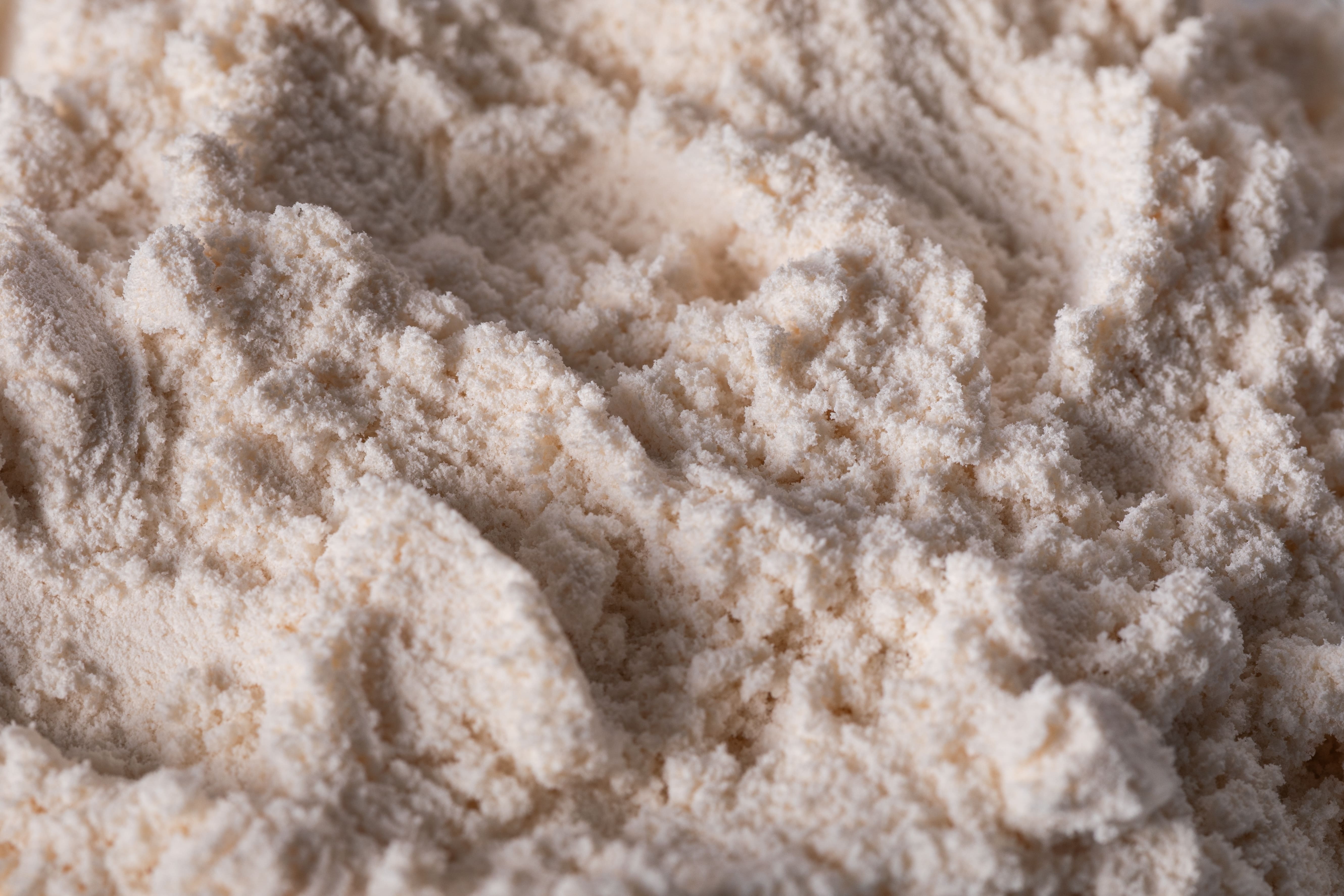
Dispersion and stability in ceramic mass
Bulk silicates act as inorganic agents that improve particle dispersion during the ceramic paste grinding process
Silicates for porcelain
They improve cohesion and stability in high-density, low-moisture masses.
Silicates for atomized masses
They promote resistance in green and stability during handling.
Stabilizing silicates
They help regulate the chemical behavior of the system during dough preparation.
Customized solutions
Technical adjustment according to mineralogical composition and production process.
Greater cohesion in crude oil
Increases mechanical resistance before cooking.
Improved handling
Reduces breakage during internal transport and handling.
Dimensional stability
It helps maintain structural integrity during drying.
Adaptation to each factory
Adjustment according to press type, humidity and actual production parameters.

Improves green strength in high compaction systems.
It provides additional cohesion during the shaping of the piece.
Reduces cracks and defects associated with internal stresses.
Silicates adjusted to mineral composition and production process.

We offer you a private and secure area where you can view the design proposals created for your company. This environment is designed to streamline the creative process, guarantee confidentiality, and facilitate decision-making at every stage of development.

Get inspired, combine, and save your ideas all in one place. Create your own collections, select your favorite designs, and download images that inspire you. A space designed for you to organize your ideas freely and maintain creative control over each project.

Explore a selection of collections designed to inspire new projects. Each one combines innovation, trend, and technique, offering exclusive designs that reflect the essence of Kerafrit and open up new creative possibilities.
It acts as an inorganic dispersant, improving particle deflocculation and increasing raw strength before cooking.
Yes. Proper dosage can improve handling resistance and reduce breakage before oven use.
Yes. It helps stabilize the structure of the part, reducing defects resulting from internal stresses.
Yes. We adjust the type of silicate according to the customer's mineralogy, humidity, and pressing system.
Everything you need to know about ceramic silicates
Inorganic dispersants for ceramic mass stability.
Ceramic silicates act as fundamental inorganic dispersants in the preparation of the ceramic mass, optimizing the grinding process and significantly improving the rheology of the slip. Their integration into high-production lines allows for efficient particle separation, facilitating a more homogeneous and stable mixture before the critical atomization phase, which translates into smoother pumping and lower energy costs.
In addition to their function as primary deflocculants, these technical additives reinforce the structural cohesion of the green pieces, being especially valuable in the formulation of high-density bodies for porcelain tiles. At Kerafrit, we adjust the type of silicate to the specific mineralogy of each factory, ensuring optimal behavior during pressing and drastically reducing breakages prior to firing.