
• Products
  • Services
  • About us
  • Blog
15 June 2026

The definitive guide: types of glazes for the ceramic Industry and their applications

Toni Martin-Lorente

Written by

Toni Martin-Lorente

Share

Choosing a ceramic glaze goes far beyond an aesthetic decision. In the ceramics industry, it is a technical decision that determines the technical performance of the piece, its strength, its stability during production, and the final perception of value.

It is not just a matter of defining the gloss, color, or texture, but of ensuring variables such as compatibility with the substrate, firing temperature, application method, reproducibility, compliance with regulations, production line performance, and design objectives.

For a plant manager, the real challenge lies not in achieving a good result in the lab, but in maintaining that consistency batch after batch. A poorly formulated glaze can cause surface defects, color variations, adhesion issues, lack of flatness, incompatibilities with digital decorations, or discrepancies between the prototype and the final product.

That is why selecting the right glaze is not just about choosing a finish. It is making a technical decision that affects the quality, cost, efficiency, and final value of the product. At Kerafrit, we develop industrial ceramic glazes specifically designed to meet this dual requirement: technical performance and aesthetic value.

At Kerafrit, we know that the success of a well-finished surface doesn’t begin on the surface itself, but long before that—through precise formulation and ongoing technical support throughout the production process. That’s why we develop industrial ceramic glazes specifically designed to meet this dual requirement, combining technical performance with aesthetic value.

In this article, you will learn:

  • What technical criteria to consider before choosing a glaze for industrial production.

  • How glazes are classified according to the most common types of industrial firing.

  • The importance of a glaze’s rheological properties and how they interact with digital and traditional decoration technologies.

  • How a well-tuned formulation helps improve reproducibility, durability, and the final appearance of the surface.

Key criteria for selecting industrial glazes

There is no such thing as a universal glaze. There is, however, a glaze that is suitable for a specific substrate, process, application, and design intent.

To make an informed choice, it is important to evaluate several factors that should guide the selection and technical development in the production facility:

1. Thermomechanical compatibility with the substrate and slip

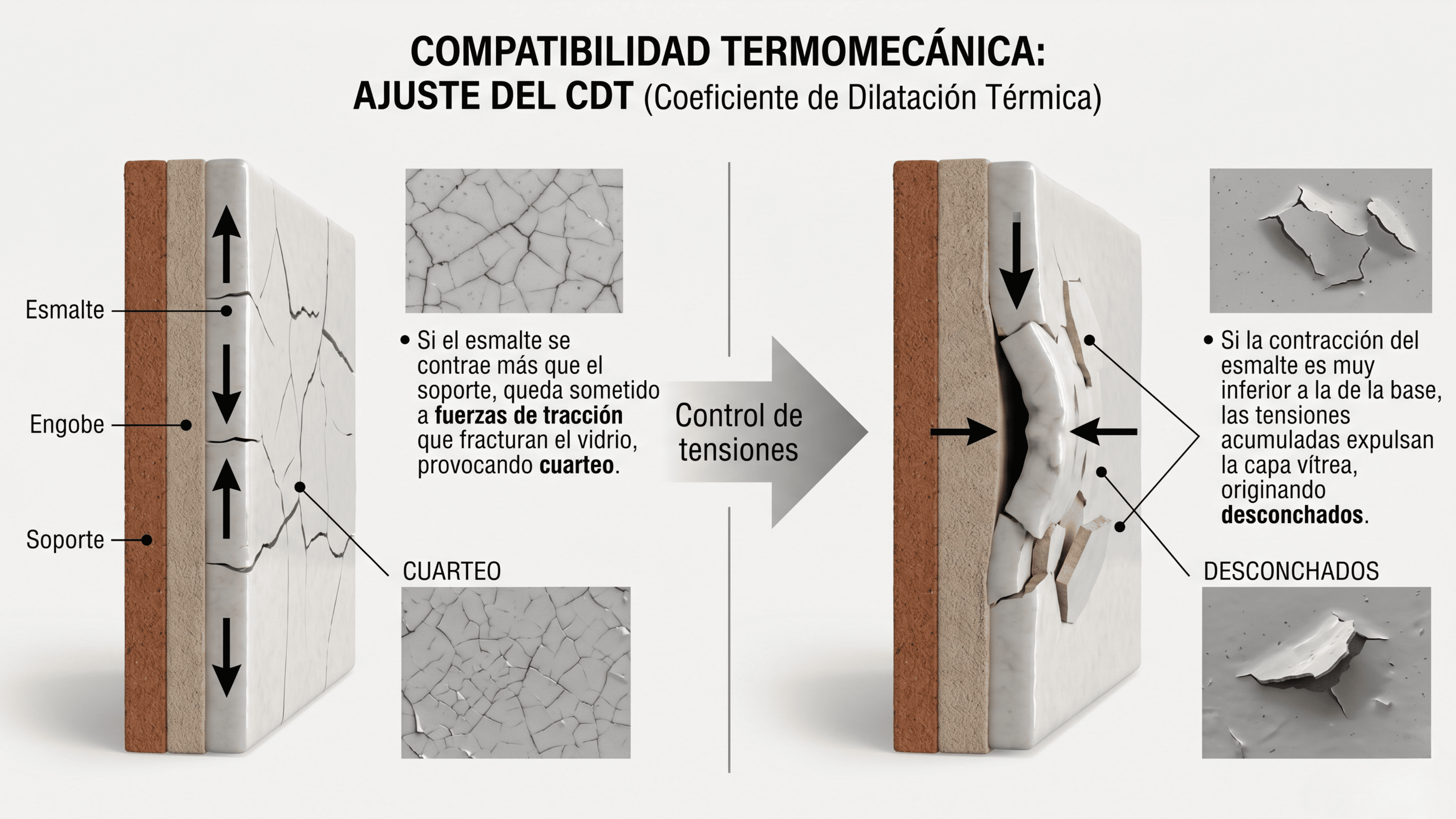
The integrity of a ceramic piece depends on the physical and dilatometric coupling between its layers. The structural behavior of ceramic materials is characterized by excellent resistance to compressive forces but extreme brittleness under tensile stress.

Therefore, when evaluating a dental enamel, stress control through precise adjustment of the Coefficient of Thermal Expansion (CTE) ensures that the surface remains under slight compression after cooling. Any deviation in this coupling triggers specific defects depending on the direction of the mismatch:

  • Compression deficit: if the glaze shrinks more than the substrate, it is subjected to tensile forces that fracture the glass, causing cracking.

  • Excessive compression: if the enamel’s contraction is much less than that of the substrate, the accumulated stresses push the glass layer outward, causing chipping. In large-format products, this excess force compromises the piece’s geometry, leading to flatness distortions (concave or convex curvatures).

In this system, the slip acts as an intermediate layer that not only optimizes adhesion and regulates absorption during the firing cycle, but also waterproofs the substrate and neutralizes color variations in the base clay, ensuring consistent and predictable performance of the entire piece.
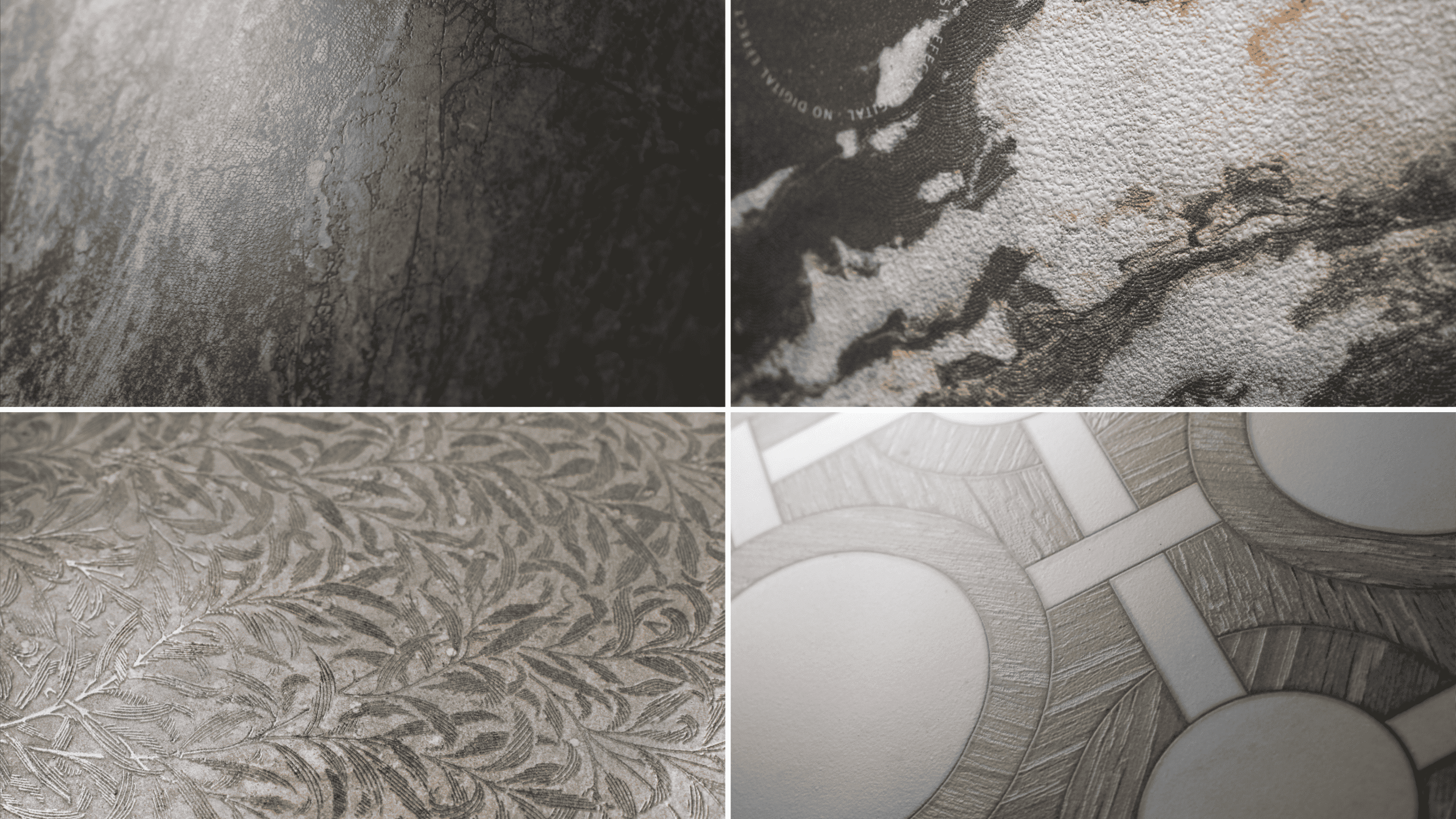
2. Classification by Nature and Finish

Before evaluating how an enamel behaves in the kiln, it is essential to understand its physical and chemical properties and the desired optical effect. In industrial formulation, enamels are primarily classified along three lines:

By preparation method:

  • Fritted glazes: these ensure greater homogeneity, reduce the toxicity of certain raw materials, and allow for faster firing cycles since the endothermic reactions have already taken place during the fritting process.

  • Raw glazes: these are typically used in high-temperature processes or specific applications where the natural reactivity of the minerals is desired.

Based on their optical properties:

  • Transparent: allow the digital design or the color of the underlying substrate to show through completely. Their refractive index must be perfectly balanced to prevent cloudiness.

  • Opaque: contain opacifiers (such as zirconium silicate) that block the passage of light, making them ideal for covering colored clays or creating neutral white bases.

  • Matte and satin: reduce light reflection while providing silky, natural textures.

  • Glossy: designed to reflect light optimally and evenly across the surface. They are the ideal choice for enhancing vibrant colors, adding greater graphic depth, and maximizing the piece’s perceived value.

Special-effect and reactive glazes:

Advanced formulations that react to temperature or digital inks to create metallic finishes, lustres, relief patterns formed by physicochemical subsidence, or visible microcrystals, enhancing the aesthetic value of the piece without adding complex steps to the production line.

3. Classification by product type and firing cycle

Optimal glaze maturation must be achieved under actual plant conditions, not in an ideal scenario. Variables such as heating rate, dwell time, kiln atmosphere, and cooling directly affect the behavior and final appearance of the surface. Due to this close relationship, industrial practice requires classifying and selecting glazes based on the type of process and the nature of the final product, distinguishing between:

  • Double-firing glazes: designed for second firings (typically between 900°C and 1100°C) which, when applied to a substrate that has already been sintered and degassed, minimize the risk of gas-related defects. These formulations are ideal for achieving vivid colors, glossy finishes, pronounced reliefs, or special effects (metallic, iridescent, etc.).

  • Glazes for monoporosa (porous tiles): optimized for rapid single-firing coating cycles. The formulation must have a very precise melting range and a hot viscosity that facilitates the escape of gases generated by the substrate’s raw materials before the glaze sets, preventing pinholes or bubbles.

  • Glazes for stoneware: used on medium-to-low absorption floor tiles. They require a strict balance between the firing point in rapid cycles and the development of basic mechanical properties. They ensure good scratch resistance and a texture that reduces the tendency to become soiled.

  • Glazes for porcelain tiles: formulated for the most demanding conditions of the industrial cycle (temperatures up to 1200–1300°C and ultra-fast cycles). They require high-purity raw materials and glasses with optimal melt viscosity to achieve proper surface spreading on non-absorbent substrates. They form the basis for high-performance products (high-traffic areas, polished or honed tiles), where resistance to deep abrasion, chemical attack, and staining is evaluated.

4. Rheology and application method

The behavior of the enamel in its liquid state determines the uniformity of the deposited coating. The formulation must be specifically tailored to the line’s technology:

  • Traditional systems (spray booth and discs): require strict control of density, viscosity, and yield point to prevent issues such as pooling, application marks, or insufficient coverage at the edges of the part.

  • Airbrush and screen printing applications: require a very precise rheological design. Airbrushing demands an ideal viscosity to achieve perfect atomization in the spray guns without causing dripping or powdery defects. Screen printing, on the other hand, requires optimal thixotropic behavior to ensure the transfer and definition of the design without clogging the mesh of the screens.

  • Hybrid systems (digital adhesive + dry grit): physicochemical compatibility and surface tensions at high temperatures must be rigorously evaluated. A mismatch between the digital adhesive’s application and the mechanically applied material will cause surface repulsion, loss of graphic definition, or interfacial adhesion problems after firing.

  • Full digital glazing: glazes specifically formulated as water-based or solvent-based must be specified, with density, viscosity, and particle size properties strictly calibrated to the dynamic behavior of the nozzles, ensuring that no clogging occurs and that proper spreading or texturing takes place in the kiln.

5. Regulatory and end-use requirements

The technical specifications for the glaze are directly linked to the tile’s intended commercial use. The product must be developed to ensure compliance with international standards:

  • Surface abrasion resistance (ISO 10545-7): a critical parameter for glazed flooring used to classify the product according to its PEI rating.

  • Chemical and stain resistance (ISO 10545-13): mandatory to ensure the surface remains unaffected by household cleaning agents, acids, and bases.

  • Anti-slip properties: these require the development of matte glazes with microtextures controlled chemically or through the addition of refractory crystalline phases, balancing the coefficient of friction required by regulations without compromising the tile’s cleanability.

6. The design aim

Defining the piece’s aesthetic and sensory purpose is a criterion that must be established from the project’s initial phase. Key parameters such as color, gloss, texture, transparency, graphic depth, and tactile sensation must be determined from the outset, as they serve not merely as cosmetic finishes but as formulation guidelines.

When the aesthetic objective is clearly communicated from the outset, the technical development can support and optimize it much more efficiently by selecting raw materials and adjusting the necessary firing curves to bring the creative vision to life without compromising stability on the production line.

Kerafrit: innovation and reliability in industrial enamels

At Kerafrit, we develop ceramic glazes with both the visual outcome and the underlying technology in mind.

We work with materials that inspire confidence, proven solutions, and technical support so that every surface can fulfill its purpose: to create, protect, stand out, and perform reliably in real-world production.

Our value lies not only in formulating glazes. It lies in understanding your process, your challenges, and your goals. In supporting you from the first conversation through to the final adjustment. In creating solutions with you that offer technical merit, aesthetic value, and industrial stability.

Every project has its own conditions. Every production line has its nuances. Every surface demands a different solution.

That’s why the best we create, we create with you.

Do you need help selecting the right glaze for your ceramic product? Request technical advice or samples, and we’ll work with you to find the best solution for your process.

Featured Articles

  • Inicio /
  • Blog /
  • The definitive guide: types of glazes for the ceramic Industry and their applications