


• Products
  • Services
  • About us
  • Blog
Corporate 30 June 2026

The Development Process for a Ceramic Product: From the Laboratory to Factory Production

Nacho Colomer Barbera

Written by

Nacho Colomer Barbera

Share

Developing a ceramic solution goes far beyond formulating a ceramic glaze, a pigment, or an additive. Every project begins with understanding what you need to achieve, the constraints of your process, and the result you hope to bring to market. Then, we provide technical expertise, testing, and support to turn that vision into stable production.

Because behind every surface lies many decisions. And there are also many people working to make it all work.

In this article, you’ll learn

  • Why the first step toward a product’s success is listening to and understanding the customer’s actual expectations before making a sale.

  • The fit to you concept.

  • What we validate before taking a formulation into production.

  • The role of the on-site technician during industrial scale-up and the management of physical variables.

  • How the factors of trust and technical honesty strengthen long-term business relationships.

1. How the Development of a Ceramic Product Begins

For us, the first step in product development will never be to simply lay a standardized catalog on the table. All real development begins with truly listening to align expectations with the technical reality of the plant. That’s why we always seek to answer three key questions before getting down to work:

  • What does the customer really expect?: We need to know precisely the technical characteristics and specific properties they are looking for.

  • Where will the product be sold?: The target market defines the level and requirements of the final product.

  • What level of final quality is needed?: Some applications require average quality, while others demand superior quality. It is our duty to adapt to avoid disappointment or disproportionate offers.

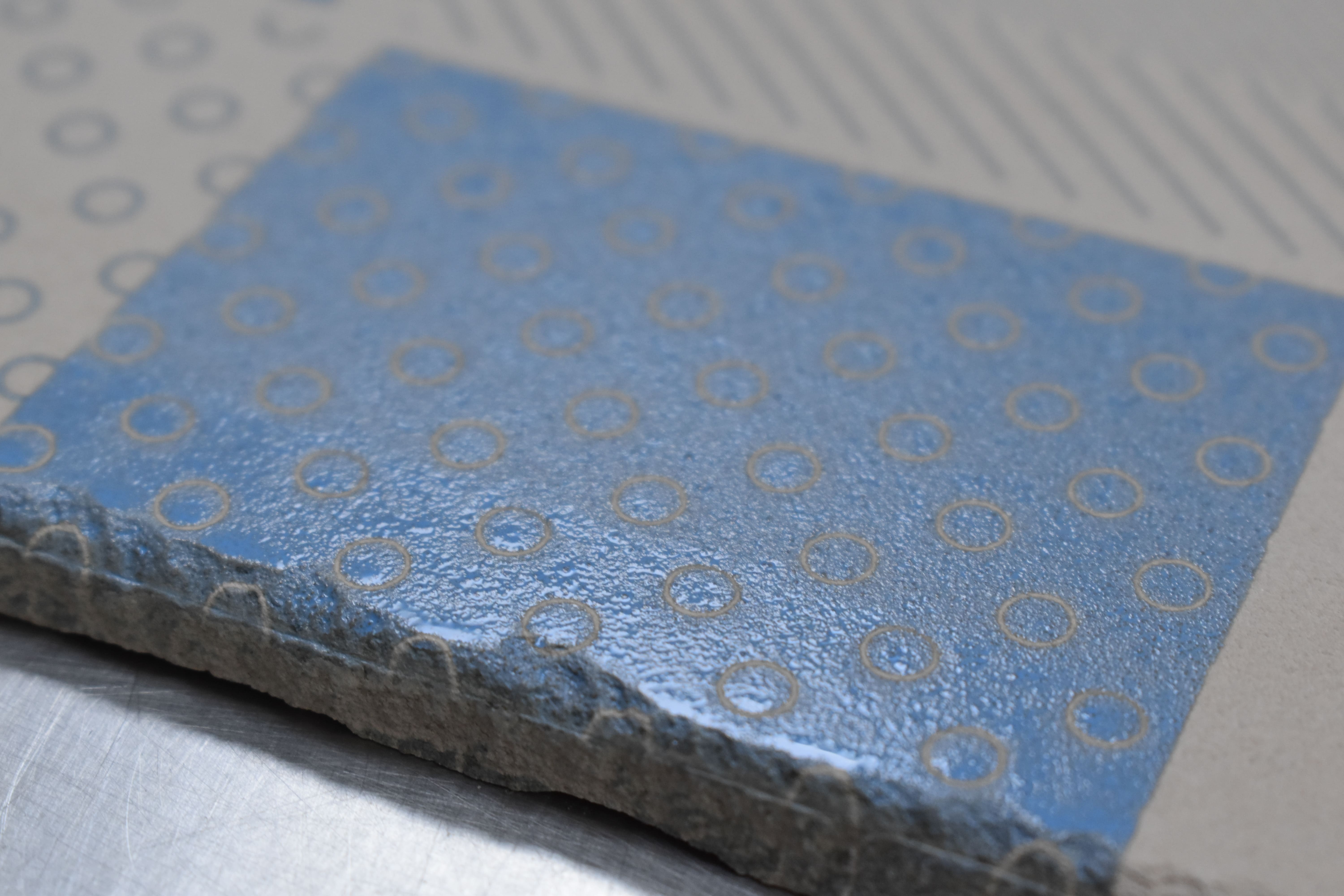
Because our sales team has a strong technical background and years of hands-on experience on the factory floor, we can guide you from the very beginning on which approaches are viable, which variables we need to control, and where opportunities may lie.

2. Behind-the-Scenes Work

Once the actual need has been defined, the project moves on to what we call our behind-the-scenes work. We gather the client’s full vision, head to the lab, and sit down directly with the technical manager. Although the theory may seem simple, we know that in practice obstacles always arise; that’s why our technical department steps in to design solutions based on the limitations and characteristics of each plant.

This is where our fit to you philosophy comes to life.

We know that off-the-shelf products often don’t work, and in many cases it’s necessary to develop custom solutions for each client. That’s why, at Kerafrit, we’re committed to complete customization. We create ex profeso products tailored to the company’s specific conditions, materials, and production process—just as we do, for example, with our clay flocculants.

3. Laboratory Testing to Validate Ceramic Development

Before committing to the industrial production of a ceramic product, we conduct exhaustive testing. We meticulously gather all of the client’s technical parameters.

All this information is replicated at Kerafrit’s facilities, where we have a fully equipped laboratory and a dedicated test line designed to replicate the exact conditions of each plant. Additionally, we have the capability to conduct firings at various companies in the industry to ensure that the product’s performance is as close as possible to what the end customer will experience.

4. The Leap to the Production Plant

As I often say in my role as Area Manager: “The success of a formula doesn’t end in our laboratory.”

The next step is to transfer the tests to the client’s own lab to make precise adjustments before moving to the production plant. Once this stage is approved, we safely move on to industrial-scale testing.

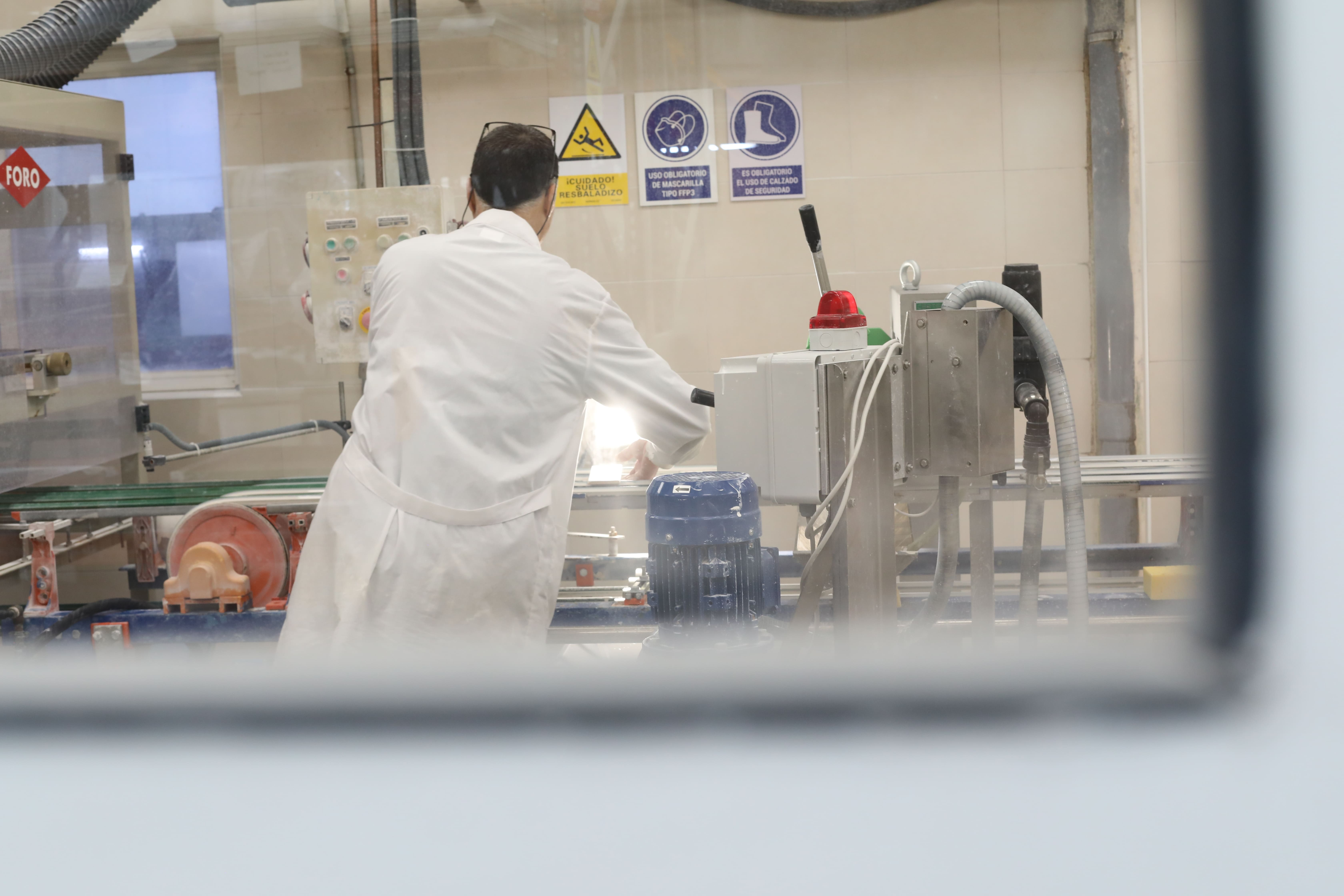
In this phase, priority is given to supporting the customer at their facilities. The synergy between the sales engineer’s big-picture perspective and the plant engineer’s specialized knowledge is key to addressing the daily variables in industrial operations that can affect the outcome:

  • The length and specific characteristics of the production lines.

  • Operational differences between the types of presses used.

  • Drastic seasonal changes (such as cold in winter or heat in summer) that directly affect drying and temperatures.

5. Optimization and Fine-Tuning of the Ceramic Production Process

In the ceramic industry, a production run rarely turns out perfect right away. A supplier’s true value is demonstrated in the final fine-tuning.

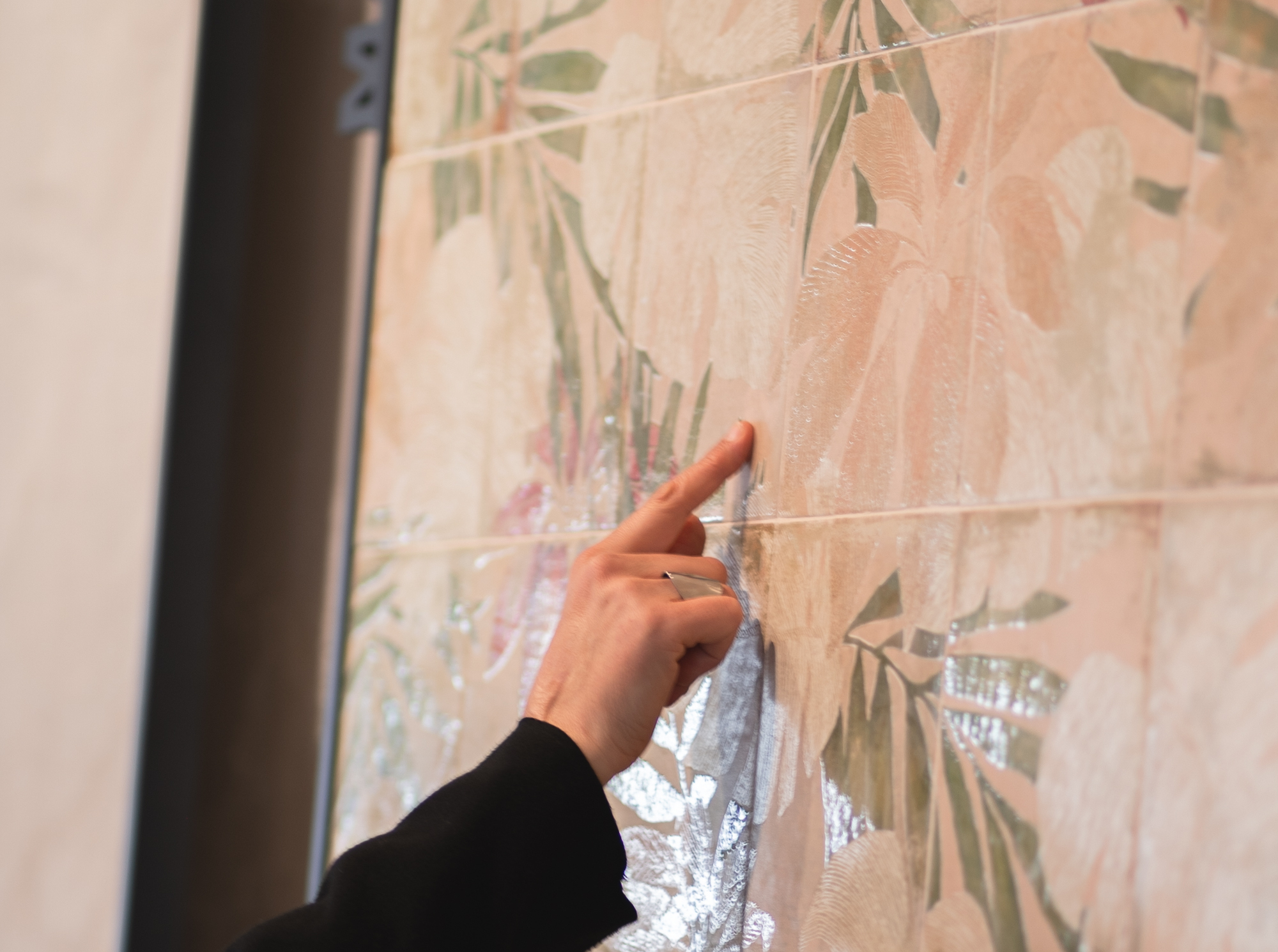
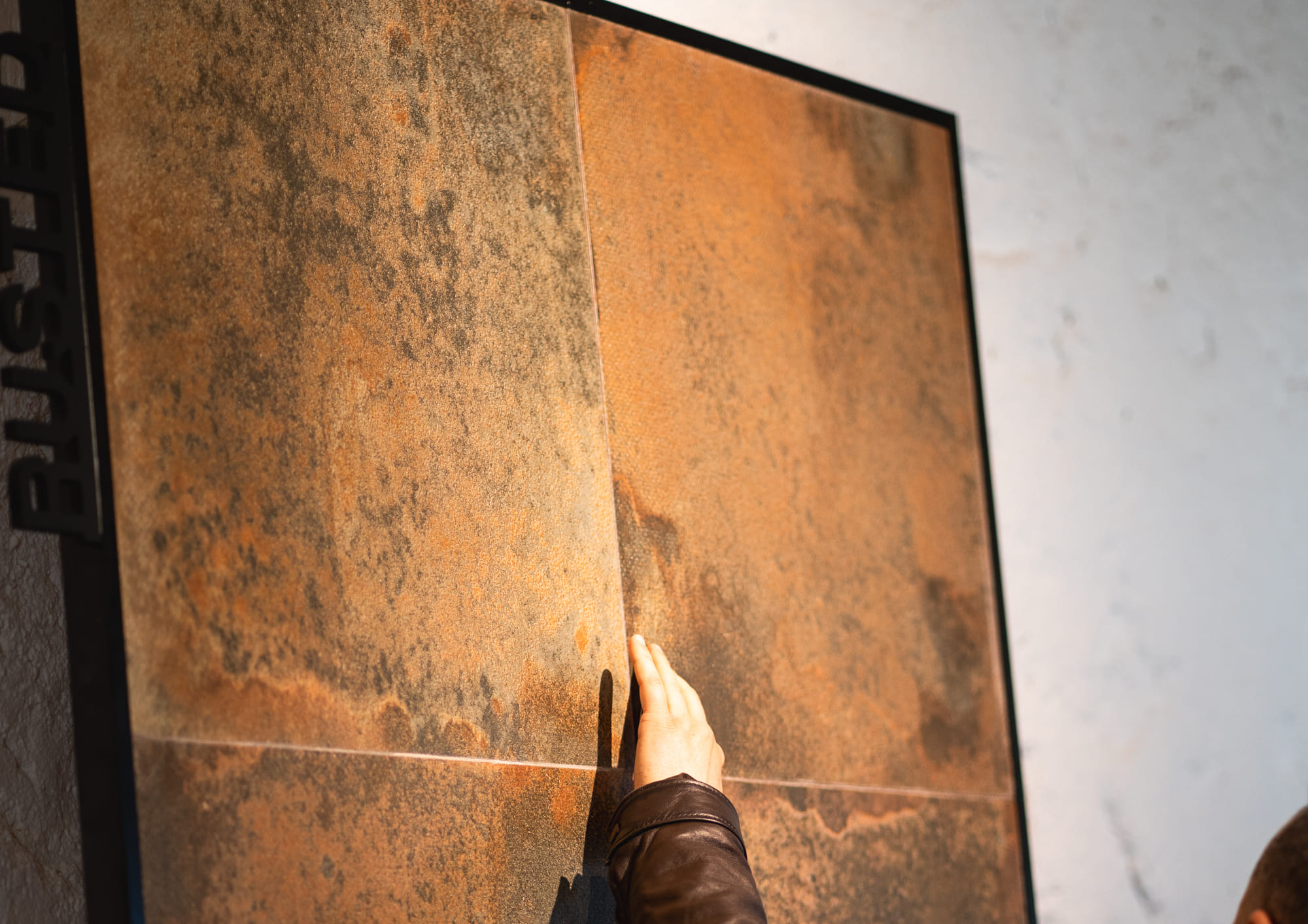
Our team of experienced technicians and designers works side by side with factory staff to correct any deviations on the fly. If a problem arises, we adjust the kiln, modify the curve, shorten or lengthen the cycle, vary temperatures, and meticulously monitor every application and detail of the decoration. Thanks to this meticulous process of joint preparation and control, we ensure that every production run ultimately turns out excellently.

Our Greatest Satisfaction

There is no better reward for our work than seeing a team regain the peace of mind needed to produce safely.

In one of our recent projects, we worked with a plant that was experiencing a series of issues at various stages of its process: glazes, engobes, applications, and additives. To resolve this, we analyzed the entire process, gradually adjusted the materials, reviewed firing and application parameters, and collaborated with their technical team during testing. Step by step, we managed to stabilize production and improve the final quality of the coating.

In the words of their own team:

“Thanks to you, we can sleep at night when we start production.”

As I once said: “At the end of the day, words are backed up by technical and tangible results. That’s why, when we walk into a factory and achieve the perfect fit, we become a strategic partner that’s very hard to do without.”

The development of a ceramic product doesn’t end when the formulation works in the lab. True success is achieved when that solution is reliably integrated into your production line and delivers stable, efficient, and reproducible results. At Kerafrit, we accompany you throughout the entire process—from the initial analysis to the final on-site fine-tuning—because we understand that every factory presents unique challenges that require specialized technical support.

If you’re looking for a team to work with you at every stage of development—from material validation to production optimization—discover our specialized technical support service for the ceramics industry and learn how we can help you bring your developments to production with maximum reliability.

The soul behind the surface.


How long does it take to develop a ceramic product?

There is no set timeframe, because each development project starts from a different point.

Sometimes we begin by taking the time to explore an opportunity to create a new product. Other times, the challenge is more immediate: replacing a solution that isn’t performing well in production, resolving an issue, or restoring stability to a production line.

The process includes several phases: understanding the need, developing and validating the product in the lab, adjusting it to the customer’s conditions, and supporting the industrial trial before the first order. Other factors that influence the timeline include the technical complexity of the project, the availability of testing facilities, and the pace of each plant.

As a general guideline, a complete development cycle typically takes between 8 and 12 months, from the first visit to the first order, especially for export projects. In the domestic market, this process can be faster when testing and coordination are carried out more locally.

However, the important thing is not to get there quickly, but to build a solution that operates reliably once it goes into production.

Why conduct laboratory tests before production?

Laboratory tests are the step that allows us to move forward with greater confidence. During these tests, we replicate the actual conditions of your process: curing curves, cycles, temperatures, and application systems. This allows us to tailor the formulation to the specific characteristics of your plant before moving on to industrial testing.

No two factories are alike, and factors such as line length, press type, drying conditions, or temperature changes can significantly alter a material’s behavior. That’s why it’s essential to anticipate deviations, reduce risks, and achieve more stable production starting with the very first order.

What are the benefits of customized development?

Customized development is based on a simple idea: a solution only truly works when it works for you.

That’s why we don’t work with generic formulas. We analyze your materials, your production conditions, and the challenges at your plant to develop solutions designed specifically for you.

This customization allows us to influence the entire process and help restore stability where there was previously uncertainty or results that were difficult to control.

What happens if the product needs adjustments during production?

Each production line has its own variables, and in many cases, adjustments are a natural part of the process.

That’s why we start with controlled production runs that let us observe how each solution performs under real-world conditions. From there, we review the process alongside your team and make adjustments to the necessary variables: kiln, cycle, temperatures, application, or decoration.

Our technical and design team works right on the production line to detect deviations, make quick decisions, and fine-tune every detail with you.

Featured Articles

  • Inicio /
  • Blog /
  • The Development Process for a Ceramic Product: From the Laboratory to Factory Production