Plastic materials: the heart of the ceramic body
Plastic materials are the heart of many ceramic compositions. Their primary function is to provide workability to the body and allow the piece to retain its shape before it enters the kiln.
In practice, they help solve a fundamental need: ensuring the material can be formed without breaking, warping, or losing cohesion.
Kaolins: purity and whiteness for bodies and glazes
Kaolin is a highly valued raw material when whiteness, purity, and control are required. It is used in white bodies, porcelain tiles, sanitaryware, glazes, and other applications where the final colour and stability are important.
It provides alumina and silica, and is typically associated with compositions where a cleaner and more controlled result is sought. Regarding white-body porous wall tile compositions, Qualicer notes the use of clays with low iron content and the introduction of kaolin when greater whiteness is required.
In practical terms, kaolin helps when we want:
However, it does not always provide maximum plasticity. For this reason, it is often combined with other clays that improve the workability of the body.
Ball clays: maximum plasticity and mechanical strength
Plastic clays, also known as ball clays, are extremely useful when there is a need to improve plasticity, cohesion, and green strength.
Their role is very clear: they help the piece better withstand handling before firing.
This is especially important in industrial processes where the piece passes through several stages before reaching the kiln. A body with low green strength can lead to breakages, downtime, waste, and a loss of efficiency.
Ball clays typically provide:
Better forming properties.
Increased cohesion.
Higher strength before firing.
Improved behaviour in pressing or casting processes.
Greater safety during handling.
Balance is important. A clay that is too plastic can increase shrinkage or make drying difficult if it is not well-balanced with other materials.
Common red clays: versatility for extrusion and single-firing products
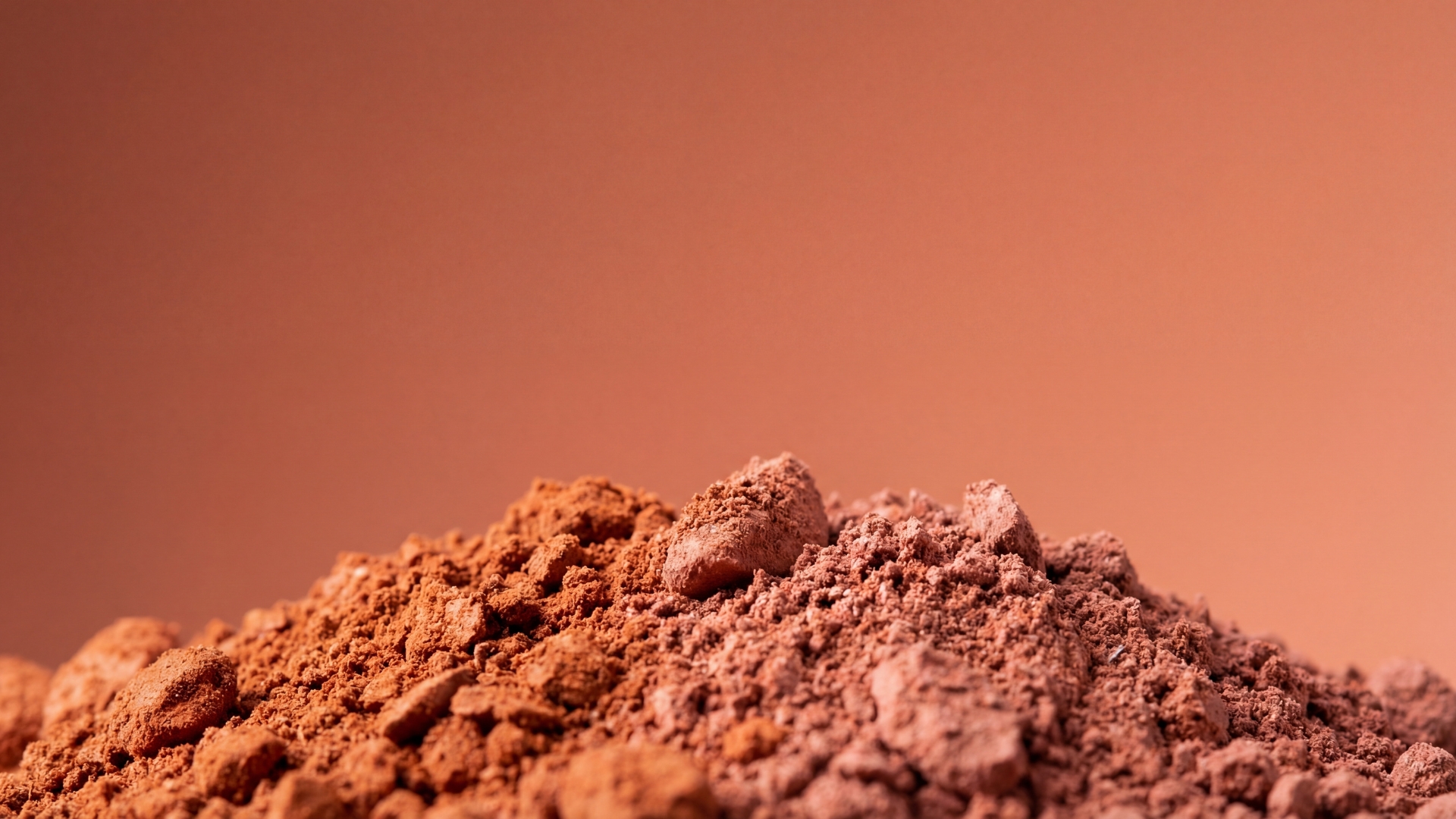
Common red clays have a long tradition in the manufacture of ceramic products, especially in construction components, floor tiles, wall tiles, and red-body products.
Their colour is primarily due to the presence of iron oxides. In Spain, the availability of natural red clays has historically influenced the production focus towards red-body tiles.
They are versatile raw materials, readily available, and perform well in many industrial applications. They are used in products where whiteness is not a priority and where a good balance between technical performance, cost, and availability is sought.
They provide:
Good forming capacity.
Versatility across different processes.
Suitability for extrusion and single-firing (monocottura).
Competitive cost.
Availability in specific production regions.
Their selection must be carefully controlled, as the natural variability of clays can influence colour, shrinkage, carbonate content, plasticity, and firing behaviour.