How antibacterial activity is measured
Effectiveness must be evaluated using a method that is appropriate for the technology used and the type of surface.
ISO 22196 for treated non-porous surfaces
ISO 22196:2011 establishes a method for evaluating antibacterial activity on treated plastics and other non-porous surfaces. Its scope excludes photocatalytic materials and also sets out specific considerations for building materials, so the suitability of the method for the product should be confirmed with the laboratory carrying out the testing. The standard was reviewed and confirmed in 2026, meaning the 2011 edition remains the current published version.
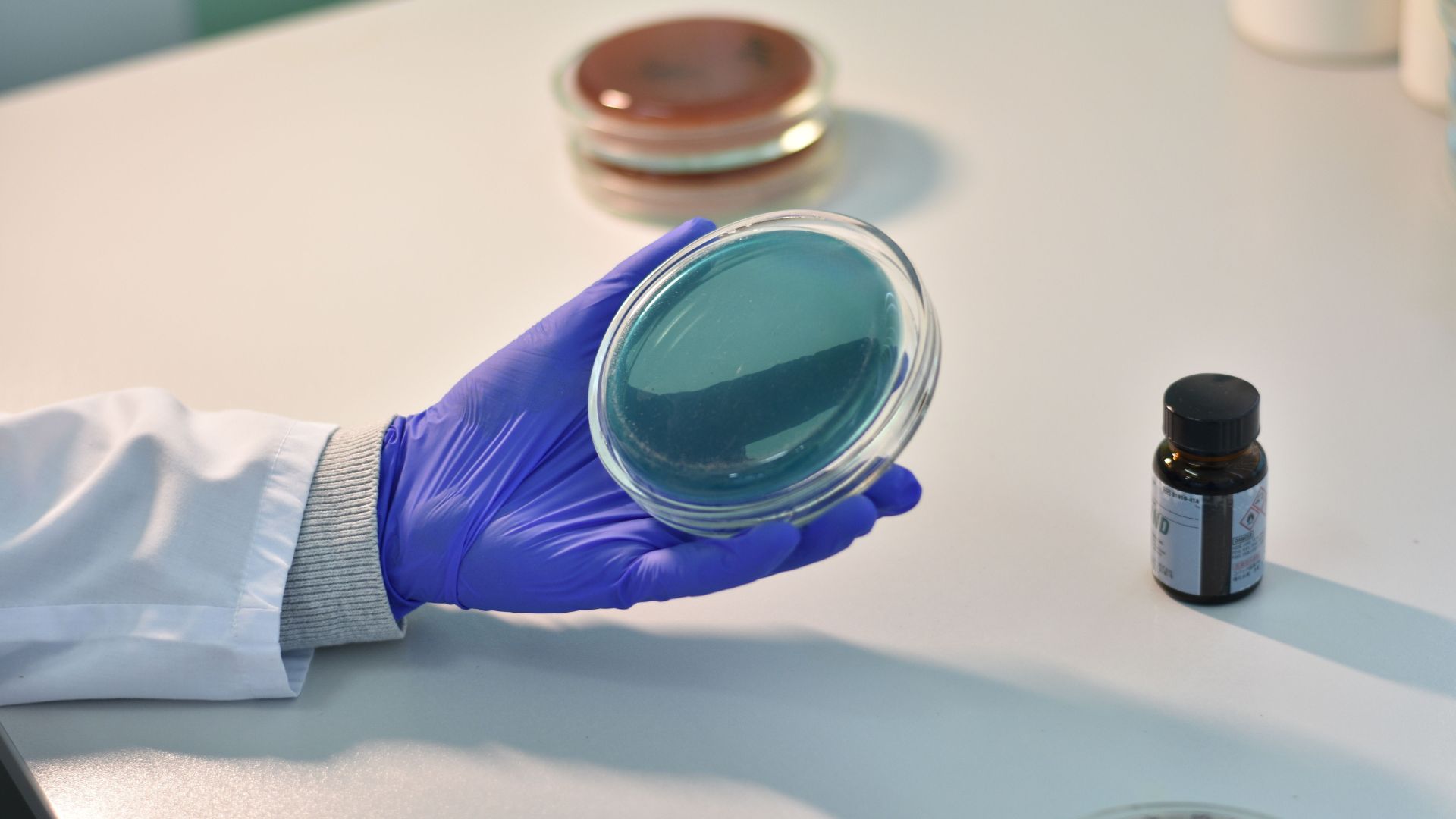
The test compares the evolution of bacteria on a treated sample and a control surface under defined conditions. The result is expressed as an activity value or reduction calculated from bacterial counts.
ISO 27447 for photocatalytic materials
Photocatalytic surfaces require a specific evaluation method. ISO 27447:2019 determines the antibacterial activity of semiconductor materials under ultraviolet irradiation and does not evaluate other properties such as antiviral activity, self-cleaning performance or air purification. The 2019 edition remains published, although a revision is currently under development.
Using different standards means working under different conditions. It is therefore not appropriate to directly compare a percentage obtained under ISO 22196 with another obtained from a photocatalytic test under irradiation.
What does a 99.9% reduction mean?
A 99.9% reduction is equivalent to a three-log reduction relative to the reference used in the test. However, the percentage alone does not fully describe the performance.
To interpret it correctly, the following should be specified:
The bacteria tested.
Contact time.
Temperature and humidity conditions.
The presence and type of irradiation.
The sample used as the control.
The calculation method.
The laboratory that performed the test.
Claims must be limited to what has actually been demonstrated. A result obtained against two bacterial strains does not, by itself, demonstrate general activity against viruses, fungi or other microorganisms.
Testing the finished ceramic piece
A raw material may show activity before being incorporated into the glaze and lose part of that activity during firing. The opposite can also occur: the combination of formulation and thermal treatment may promote the formation of the functional phase.
For this reason, evaluation must be carried out on a representative sample of the product that will reach the market and after any process stages that could modify its surface:
From the laboratory to the industrial line
Development begins by defining the functionality required by the manufacturer. We need to understand the type of product, its intended use, the finish, the microorganisms against which it will be evaluated and the performance characteristics that must be maintained.
From there, we formulate different alternatives and analyse their ceramic behaviour. Initial trials allow us to compare concentrations, incorporation systems, firing cycles and finishes.
The best formulation is not necessarily the one that achieves the highest percentage in the first sample. It must meet four conditions:
Demonstrable activity.
Compatibility with the process.
Aesthetic and technical stability.
Industrial reproducibility.
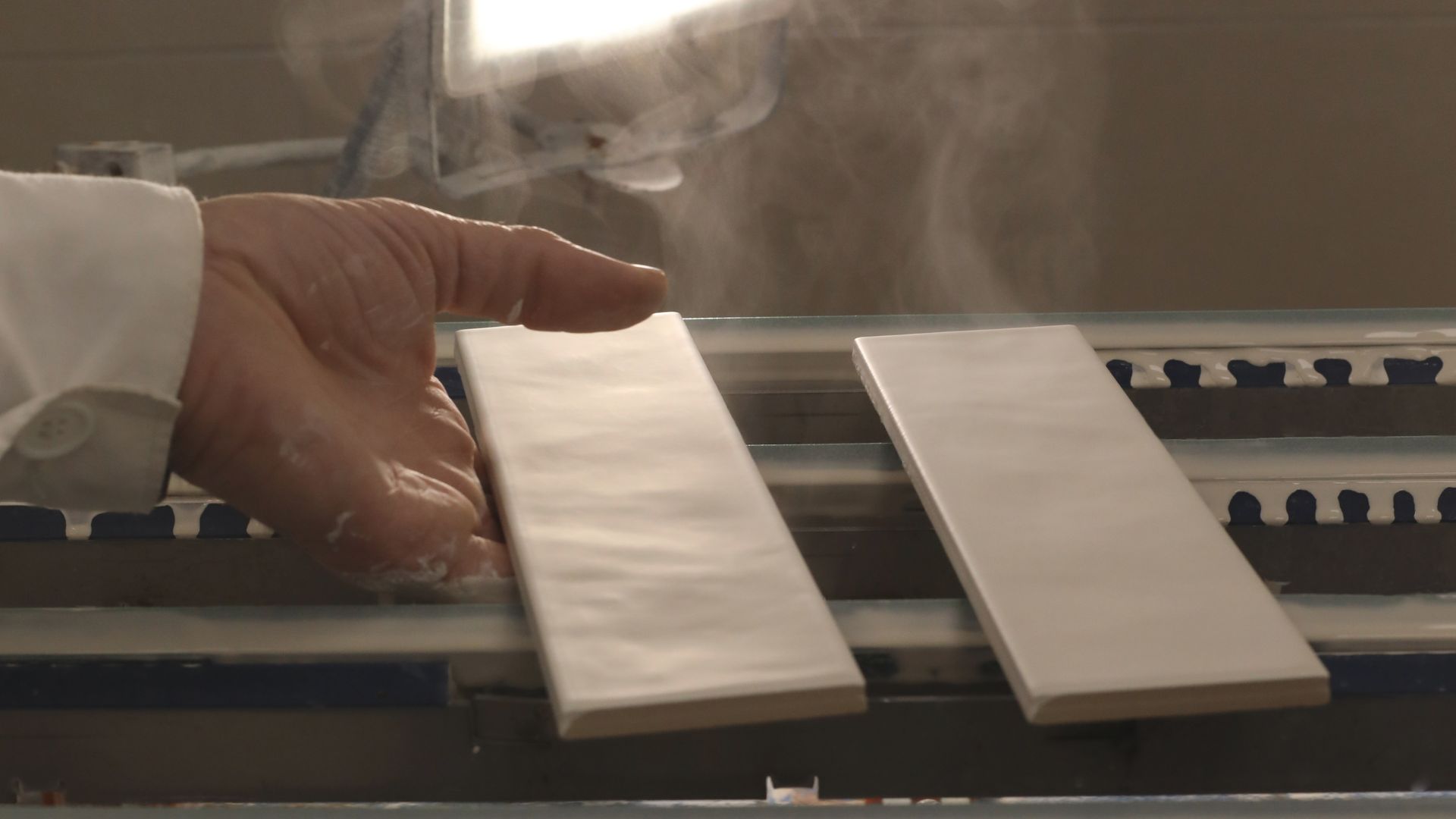
Factory scale-up makes it possible to verify suspension stability, application weight, application homogeneity, kiln response and variation between pieces. Technical literature confirms that transferring an antibacterial glaze to an industrial kiln can increase variability due to the real differences found in thermal cycles.
Once the development has been stabilised, the critical parameters should be documented: dosage, density, viscosity, application weight, thermal curve, finish and controls on the fired piece.
What can reduce effectiveness over time?
Initial validation alone does not guarantee that performance will remain unchanged throughout the product’s service life.
Changes in raw materials, application deviations and variations in firing can alter the presence of the active agent at the surface. Polishing, abrasion or certain treatments may also remove or transform the functional layer.
In addition, dirt and residues from maintenance products can hinder contact between bacteria and the active surface. Instructions for use and cleaning should therefore be compatible with the technology employed.
Where required by the intended use, antibacterial activity should be evaluated after abrasion, ageing, chemical resistance or repeated cleaning tests. The latest industrial research already incorporates this type of testing to determine whether the activity is maintained beyond the newly manufactured sample.
Applications of antibacterial ceramics
This functionality can add value in healthcare environments, care homes, laboratories, educational facilities, sports facilities, professional kitchens and other shared-use spaces.
Each application involves different requirements. Flooring intended for high-traffic areas must combine antibacterial activity with wear resistance and safety in use. A healthcare wall covering must withstand frequent cleaning and chemical products. On a domestic surface, functionality needs to coexist with aesthetics, ease of maintenance and clear communication for the user.
The final application should be part of the product definition from the very beginning. There is no single formulation that is suitable for every substrate, finish or condition of use.
What manufacturers should assess before launch
Before marketing a collection as antibacterial, the manufacturer should ensure that there is consistency between the formulation, the tested product and the message communicated to the market.
In the European Union, articles treated with biocidal products or deliberately incorporating them are subject to the Biocidal Products Regulation. Active substances must be approved or included in the relevant procedures for the intended use. In addition, where an article is claimed to have biocidal properties, specific labelling and information requirements may apply.
This assessment should be carried out with regulatory specialists. As the ceramic color manufacturer, our responsibility is to provide technical information on the formulation, collaborate in the validation process and ensure that the industrial product corresponds to the samples that were evaluated.
At Kerafrit, we understand this type of development as a shared process with the manufacturer’s R&D, product and production teams. We formulate tailored solutions, analyse how they interact with the ceramic system and support testing until a stable operating window is defined. This approach reflects our positioning as a technical partner: designing solutions and moving forward alongside you throughout the entire process.
Developing antibacterial ceramics requires formulation, firing, validation and communication to work in alignment. When all these elements are developed together, functionality stops being an added promise and becomes a real, measurable and reproducible performance feature.
Would you like to incorporate antibacterial activity into a collection or review an existing formulation? At Kerafrit, we study the complete ceramic system and support you from glaze development through to industrial validation.